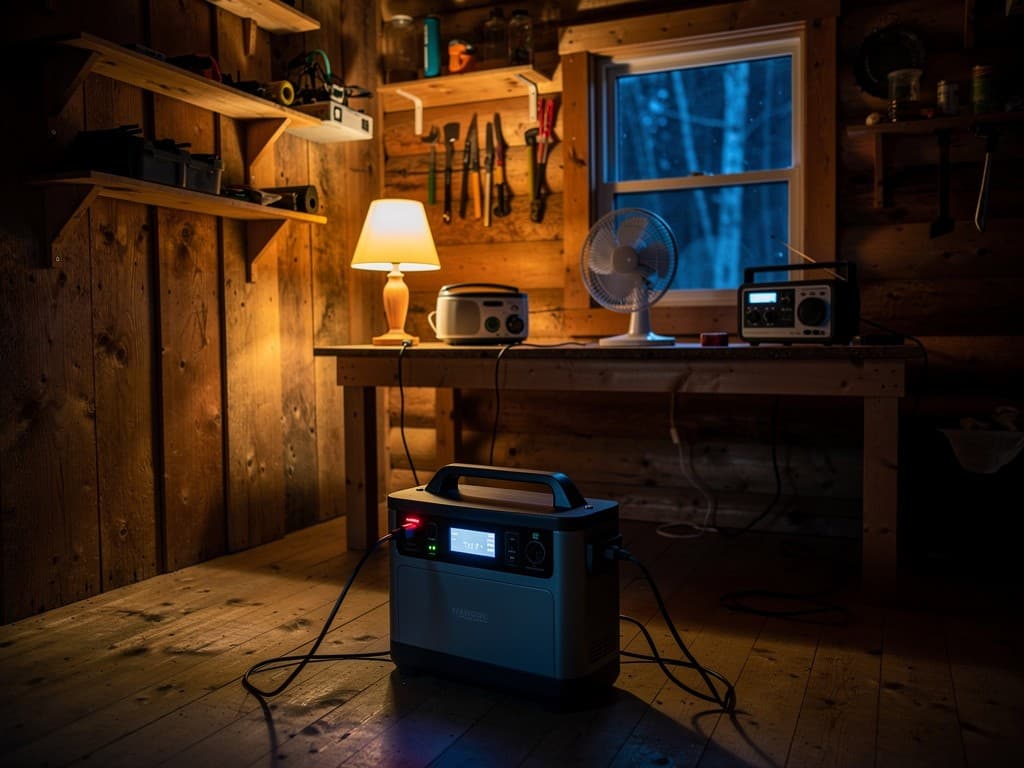
Most people don't actually want a gas generator — they want quiet, reliable power during outages without fuel, fumes, or constant maintenance.
Portable power stations paired with solar panels now cover the majority of emergency and off-grid needs for homes and cabins.
This guide shows how to build a simple, reliable emergency power setup using modern portable systems — no generator required.
Why Skip a Generator?
Gas generators solve one problem but introduce several others.
Common issues
- Fuel storage and rotation
- Noise
- Indoor safety limitations
- Regular maintenance
- Limited runtime without refueling
For most households, these downsides outweigh the benefits.
The Simple Emergency Power System
A generator-free setup is built around three components:
Portable power station
Handles storage and output.
Solar panels (optional but recommended)
Enable recharge during extended outages.
Load planning
Power what matters — not everything.
This approach is quieter, safer indoors, and far easier to maintain.
Recommended Setups by Scenario
🏠 Apartment or Small Home
What to power
- Refrigerator
- Lights
- Internet router
- Phone charging
Recommended
- Mid-size portable power station
- Foldable solar panel
🏡 House (Extended Outages)
What to power
- Refrigerator / freezer
- Medical devices
- Lighting
- Communications
Recommended
- Large-capacity power station
- Multiple solar panels
🌲 Cabin or Off-Grid Property
What to power
- Lighting
- Tools
- Water pumps (intermittent)
- Refrigeration
Recommended
- Solar-focused power station
- Permanent or semi-permanent panels
Choosing the Right Power Station
Focus on:
- Capacity (Wh) for runtime
- Output (W) for appliances
- Recharge options
- Portability vs permanence
If you're comparing specific models, start here:
Best Portable Power Stations for Off-Grid & Emergency Use
Common Mistakes to Avoid
- Oversizing for unrealistic loads
- Ignoring solar input limits
- Powering non-essential devices
- Assuming one unit covers an entire house
Emergency power works best when planned intentionally.
Further Reading
A quiet, fuel-free emergency power system is easier to build than most people think.
Start with a realistic load plan, choose the right power station, and expand as needed.